Quote Versus Contract: A Buyer's Field Guide to UK Business Connectivity in 2026

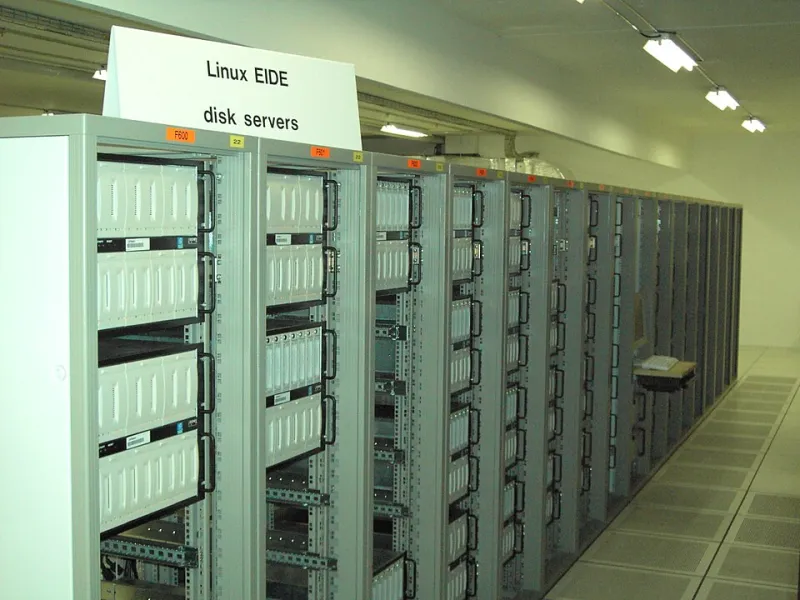
Photo: Philip Halling , CC BY-SA 2.0, via Wikimedia Commons
A connectivity quote usually arrives as a two-page PDF and a spreadsheet tab called something like 'pricing v7 final'. Somewhere inside is the figure you will actually pay each month, and it is seldom the one set in the largest font. What follows is a buyer's field guide to the portions of a UK business connectivity deal that tend to be glossed over, whether the product on the table is an Ethernet leased line, a business FTTP service or an SD-WAN overlay.
Establish what you are actually buying
Three products get discussed in the same breath and behave very differently.
An Ethernet leased line — often sold as dedicated internet access or business fibre — is uncontended, generally symmetric, and normally carries a contractual service level agreement with defined fix times. A business FTTP service rides a shared passive network; products vary considerably between providers, some are symmetric, some are not, and repair commitments are usually softer than on a leased line. SD-WAN is not a connectivity product at all. It is a way of orchestrating two or more underlying circuits, and a recurring trap is that the overlay is quoted with licences and managed support while the circuits themselves sit on a separate order form, from a different supplier, with a different lead time.
Before comparing anything, ask each bidder to confirm the handover type, the committed bandwidth in both directions, whether the service is contended, how many static IPv4 addresses are included, and whether IPv6 is supported natively or by tunnel.
The four figures that decide most deals
1. Monthly recurring charge, and what it excludes
Router rental, managed monitoring, out-of-hours support, firewall licensing and change requests are frequently priced separately. Ask for a single monthly figure that includes everything you expect to consume, plus a schedule of what falls outside it.
2. Installation and excess construction charges
Where fibre does not already reach the building, a survey may reveal the need for civils work. Excess construction charges (ECCs) can, in awkward cases, exceed the value of the entire contract. Insist on an ECC cap written into the order, together with a right to cancel without penalty if the survey exceeds that cap.
3. Contract term and the early termination charge
Twelve, twenty-four, thirty-six and sixty-month terms are all common. Ask how the termination charge is calculated — remaining rental only, or remaining rental plus unamortised installation and any waived connection fee clawed back. Model the exit cost at month eighteen, not just at month one.
4. The annual uplift
Since January 2025, Ofcom has required telecoms providers to state any inflation-linked price rise in pounds and pence at the point of sale for new contracts. By 2026 this should be standard practice. If a bidder still quotes an uplift as a formula — CPI plus a percentage — ask for the cash figure against the contract term and confirm whether the uplift applies to the circuit rental alone or to the whole managed charge.
Wayleaves, landlords and buildings you do not own
A wayleave is the legal permission a landowner grants for apparatus to be installed and maintained. If you are a tenant, you will usually need landlord consent before work can begin, and landlords are entitled to charge for their surveyor's time — commonly a few hundred pounds, occasionally well over a thousand. These costs and timelines sit outside the provider's service level agreement, and they are a frequent cause of installations that slip by weeks.
If you occupy a multi-tenant building, ask the managing agent whether a building-wide agreement or shared fibre entry already exists. Reusing infrastructure that is already in the riser is almost always quicker and cheaper than commissioning new.
Reading the service level agreement properly
Service levels come in two broad shapes. A target is an aspiration measured after the fact. A guarantee carries a remedy. Ask which applies to fault restoration, and note the difference between response time and fix time — a four-hour response that leads to a two-day fix is not the same thing.
Three further points are worth pressing on:
- Service credits are often capped at the monthly rental and frequently must be claimed within a set window. A credit regime nobody administers is worth nothing.
- Exclusions tend to cover third-party tail circuits, customer premises equipment, planned maintenance and faults traced to customer cabling.
- End-to-end accountability matters where a circuit crosses more than one network. Establish who owns the fault and whether the retail provider has purchased an enhanced care level from the wholesaler, or only the standard one.
Questions worth putting to every bidder
- Is the quoted bandwidth committed and symmetric?
- What is the ECC cap, and can the order be cancelled if the survey exceeds it?
- What is the target install date, and is there any remedy if it slips?
- What is the fix time, what are the exclusions, and how are credits claimed?
- Does the annual uplift apply to the whole charge or just the circuit?
- What notice period applies before auto-renewal, and how is it served?
- What is the termination charge at month eighteen?
- Which party is responsible for landlord consent and wayleave fees?
- What happens to the price if we upgrade bandwidth mid-term?
- Can we see the full terms and conditions, not only the order form?
Comparing bids without a spreadsheet mist
Normalise every bid to a single figure: total cost of ownership across the whole term, including install, ECC, equipment, managed services, uplifts and any plausible exit. Divide that by committed symmetric megabits to get a rough cost per megabit, then set the number aside and look again at lead time, remedy strength and the supplier's willingness to put commitments in writing. The cheapest quote is regularly the one with the vaguest service level and the most discretionary construction charges.
The practical test is simple: if a director asked you in eighteen months why the bill rose and why the fix took three days, would the paperwork you signed have an answer? If not, the deal is not yet ready for signature.