The Repatriation Reckoning: A Practical Framework for Deciding What Belongs in a Rack
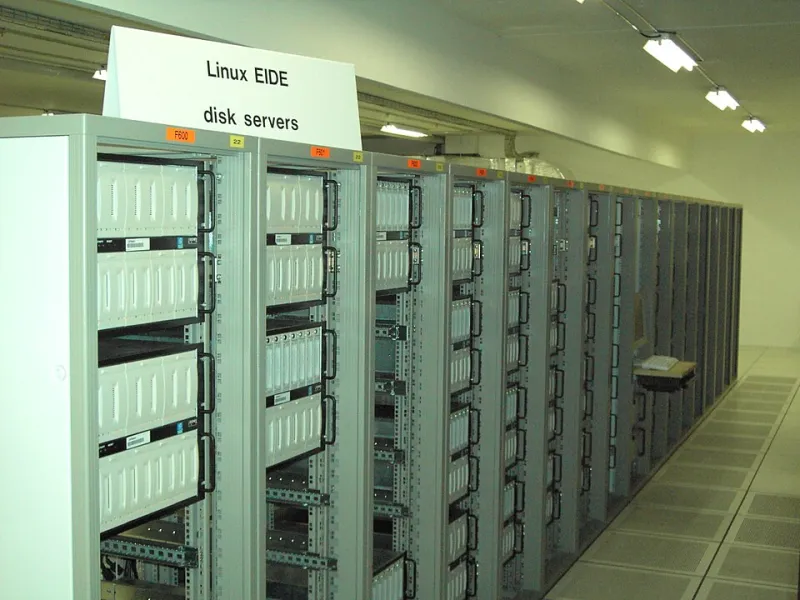
Photo: Faber, CC BY-SA 2.0, via Wikimedia Commons
Cloud repatriation has acquired a reputation as a retreat — an admission that the migration did not work. That framing is unhelpful. The more accurate reading is that a correction is under way, and that organisations which treat workload placement as a recurring engineering decision rather than a one-off strategic bet tend to end up with lower bills and fewer surprises.
How the default was set
For roughly a decade, 'cloud-first' functioned as a procurement shortcut. It removed a difficult conversation from the board agenda, it converted capital expenditure into operating expenditure at a moment when that was attractive, and it was reinforced by public sector guidance that explicitly preferred cloud. That guidance has since been retired and replaced with an expectation of deliberate assessment, which is a fair reflection of where most UK organisations now find themselves.
The difficulty is that many business cases were built on year-one economics. Migration costs were counted; steady-state costs were estimated from a pricing calculator populated with optimistic assumptions about utilisation, storage tiering and the proportion of workloads that would ever be modernised.
What repatriation actually looks like
In practice, almost nobody moves everything back. What tends to return is a narrow set of workloads: steady-state systems with predictable, round-the-clock demand; applications with heavy internal east-west traffic; latency-sensitive systems sitting next to equipment in a factory or a trading floor; and backup or archive data whose retrieval patterns make object storage pricing uncomfortable.
This is not a strategy so much as an accumulation of individual decisions, each locally rational. The risk is that an organisation ends up hybrid by accident — with two operating models, two sets of skills to maintain and two sets of controls to evidence.
The costs that were never modelled
Egress. Data transfer charges remain a live negotiating point. Some hyperscalers have removed exit fees for customers departing entirely, and the EU Data Act's cloud switching provisions, applicable since September 2025, have pushed portability further up the agenda even for UK buyers who are not directly in scope. The direction of travel is toward easier exit; contracts signed in 2026 should reflect that.
Latency and architecture. A workload that makes thousands of small calls between an application tier and a database behaves very differently across an availability zone boundary than across a rack. Re-architecting to suit the cloud is often the right answer, but it is a project cost that rarely appears in the original case.
Licensing. Vendors have spent the last few years repricing how their software runs on someone else's infrastructure. The practical effect is that assumptions made in 2020 about running a database or a virtualisation estate in the cloud may no longer hold, and a refresh cycle is the natural moment to re-run the numbers.
People. On-premises infrastructure does not eliminate operating expenditure; it disaggregates it into hardware refresh, rack space, power, cross-connects, licensing and a skills requirement that many teams have quietly lost.
Where the cloud remains the obvious answer
It is worth stating plainly: for spiky, seasonal or unpredictable demand, for development and test environments, for disaster recovery in a second region, for anything touching a global edge, and for organisations without a credible infrastructure team, public cloud is usually the sensible default. The argument is not that cloud is expensive. It is that the bill reflects a set of choices, and choices can be revisited.
A six-test framework
Apply these in order to each workload, and record the answers. The value is in the audit trail as much as the verdict.
- Data gravity. How much data does the workload hold, how often does it cross the boundary, and what would it cost in money and time to move once? Workloads with large, stable datasets and modest change rates score well for repatriation.
- Latency and determinism. Does the application need predictable sub-ten-millisecond access to a database, a controller or a piece of industrial equipment? If so, proximity is a hard requirement rather than a preference.
- Demand profile. Plot utilisation across a month. A flat line at 60% is a candidate for owned or colocated capacity. A spiky graph with long idle periods is not.
- Regulatory and residency position. UK data residency is generally satisfiable within UK cloud regions, so residency alone is rarely a reason to repatriate. What matters is whether your sector regulator, contractual commitments or data classification require physical control of the medium.
- Operational capability. Can you patch, monitor, back up and recover this system at three in the morning? If the honest answer is no, the cloud bill is buying you something real.
- Exit economics. Model five years including hardware refresh, colocation rent, power, cross-connects, redundancy and staff time — then compare with the cloud figure including committed-spend discounts you would actually qualify for, not list price.
The colocation middle ground
Much of the current conversation collapses into a false binary between hyperscale and a server cupboard. Colocation in a UK facility offers rack space, resilient power and connectivity without the capital exposure of a owned data centre, and it is where many repatriated workloads sensibly land. Capacity is not unlimited, particularly in the established corridors around London and the M4, and power density is now the constraint that shapes pricing more than floor space does. Anyone considering this route should secure capacity early and be realistic about refresh cycles.
What boards should ask
- Which workloads have we actually reviewed in the last twenty-four months, and where is that recorded?
- What proportion of our cloud spend is steady-state rather than variable?
- What would it cost, in money and disruption, to move our five largest workloads elsewhere?
- Do we have the skills to operate anything outside a managed cloud platform?
- Who owns workload placement as a standing decision rather than a project?
The conclusion
The reasonable position for 2026 is neither cloud-first nor cloud-last but workload-first. Placement should be revisited every eighteen to twenty-four months, on the same cycle as hardware refresh and contract renewal, with the six tests above applied consistently and the results kept. Organisations that do this rarely announce a dramatic repatriation programme. They simply stop paying for capacity they do not use, and stop assuming that the answer is the same for every system in the estate.